Install CodeDNA
One CLI connects every coding agent to the same protocol, annotates all supported languages, and verifies the setup.
Overview
Use the same setup for a new repository or an existing codebase. No model API key is required for the structural pass.
Provides language detection, annotation, verification, and the project installer.
Installs native instructions/hooks, then adds CodeDNA headers to existing source files.
| Tool | Option | Enforcement |
|---|---|---|
| Claude Code | claude | Active |
| Codex | codex | Instructions + Git gate |
| Cursor | cursor | Active v1.7+ |
| GitHub Copilot | copilot | Active |
| Cline | cline | Active v3.36+ |
| OpenCode | opencode | Active |
| Windsurf | windsurf | Instructions only |
| Aider | aider | Instructions + Git gate |
| Antigravity | agents | Instructions only v1.20.3+ |
Quick Setup
Run these commands from the repository root:
pipx install git+https://github.com/Larens94/codedna.git
codedna install --path . --tools codex --no-wiki-sync
codedna init . --no-llm
codedna doctor --path .
Replace codex with one or more values from the table. Mixed teams can use --tools claude codex opencode.
Claude Code
Active enforcementcodedna install --path . --tools claude --no-wiki-sync
Installs CLAUDE.md + 4 enforcement hooks + .claude/settings.local.json. Claude Code reads CLAUDE.md automatically; hooks validate every write.
What the four hooks do
| Hook | Event | What it does |
|---|---|---|
| SessionStart | Session begins | Reads .codedna, injects project name and module count into context |
| PreToolUse | Before every .py write/edit | Reminds agent to read docstring and plan agent: update |
| PostToolUse | After every .py write/edit | Validates all 4 fields exist and agent: has today's date |
| Stop | Session ends | Reminds to update .codedna with a new agent_sessions entry |
brew install jq (macOS) or apt install jq (Linux).Settings file location
| File | Committed? | Use when |
|---|---|---|
| .claude/settings.local.json | ❌ gitignored | Personal setup — each developer configures locally |
| .claude/settings.json | committed | Team / CI — shared via the repo, always present |
Codex
Instructions + Git gatecodedna install --path . --tools codex --no-wiki-syncInstalls the cross-vendor AGENTS.md, the local manifest, and the Git pre-commit gate. Codex discovers the repository instructions automatically and follows the same protocol as every other agent.
Cursor
Active enforcement v1.7+codedna install --path . --tools cursor --no-wiki-sync
Installs .cursorrules + hook scripts in .cursor/hooks/. Cursor runs hooks automatically on file edits and when the agent stops.
| Hook | Event | What it does |
|---|---|---|
| after-file-edit.sh | After every file edit | Validates CodeDNA header on source files |
| stop.sh | Agent finishes | Reminds to update .codedna and commit with AI trailers |
mkdir -p .cursor/rules && cp .cursorrules .cursor/rules/codedna.mdcGitHub Copilot
Active enforcementcodedna install --path . --tools copilot --no-wiki-sync
Installs .github/copilot-instructions.md + .github/hooks/hooks.json + .github/hooks/codedna.sh. Copilot runs hooks automatically at session boundaries and after every tool use.
| Hook | Event | What it does |
|---|---|---|
| session_start | Session begins | Reads .codedna, injects project context |
| post_tool_use | After every file write/edit | Validates CodeDNA header on source files |
| session_end | Session finishes | Reminds to update .codedna and commit with AI trailers |
Cline
Active enforcement v3.36+codedna install --path . --tools cline --no-wiki-sync
Installs .clinerules + hook scripts in .clinerules/hooks/. Cline runs hooks on task start and after every file write/edit.
| Hook | Event | What it does |
|---|---|---|
| TaskStart.sh | Task begins | Reads .codedna, injects project context |
| PostToolUse.sh | After every file write/edit | Validates CodeDNA header on source files |
OpenCode
Active enforcementcodedna install --path . --tools opencode --no-wiki-sync
Installs AGENTS.md + .opencode/plugins/codedna.js. Both load automatically at the next opencode startup.
| File | What it does |
|---|---|
| AGENTS.md | CodeDNA v0.9 instructions — loaded automatically as system prompt |
| .opencode/plugins/codedna.js | After every file write → warns on missing headers in comment-based languages. At session end → reminds to update .codedna and commit with AI trailers. Native AXL validation runs through the CLI. |
Windsurf
Instructions + Git gatecodedna install --path . --tools windsurf --no-wiki-sync
Installs .windsurfrules — Windsurf reads it automatically and applies CodeDNA rules to all Cascade sessions.
Aider
Instructions onlycodedna install --path . --tools aider --no-wiki-sync
Installs AGENTS.md. Load it as Aider's read-only conventions file:
aider --read AGENTS.md
Or add permanently to .aider.conf.yml:
read: AGENTS.md
Antigravity
Instructions only v1.20.3+codedna install --path . --tools agents --no-wiki-sync
Antigravity is Google's agentic IDE. CodeDNA targets two of its native extension points so the protocol is loaded automatically and available on demand.
| File | Mechanism | When it loads |
|---|---|---|
| AGENTS.md (repo root) | Cross-vendor rules | Always-on — auto-loaded as system prompt every session (Antigravity v1.20.3+) |
| .agent/workflows/codedna.md | Antigravity workflow | On-demand — type /codedna in agent chat |
CLI — Annotate an existing codebase
Bulk-annotate all files in a project from the terminal. Supports local models via Ollama at zero cost.
pipx install git+https://github.com/Larens94/codedna.git

# Free — structural only, no AI
codedna init /path/to/project --no-llm

# Free — local model via Ollama
codedna init /path/to/project --model ollama/llama3

# Paid — Anthropic Haiku (~$1-3 for a Django project)
ANTHROPIC_API_KEY=sk-... codedna init /path/to/project --model claude-haiku-4-5-20251001
Commands
| Command | What it does |
|---|---|
| codedna init PATH | First-time annotation — L1 module headers + L2 function Rules:. Auto-detects languages. |
| codedna update PATH | Incremental — only unannotated files, safe to re-run |
| codedna refresh PATH | Recalculate exports: + used_by: via AST/tree-sitter. Zero LLM cost. Preserves rules:/agent:. |
| codedna check PATH | Coverage report without modifying files. Exit code 1 if incomplete — works in CI. |
| codedna doctor --path PATH | Onboarding health check for the manifest, parsers, hooks, CI, and lock configuration. |
| codedna impact FILE --path PATH | Show rules and transitive callers before changing a public contract. |
| codedna verify PATH | Read-only structural drift gate for exports: and used_by:. Add --json in CI. |
| codedna manifest PATH | Generate .codedna project map (Level 0): packages, depends_on, key_files |
| codedna mode MODE | Get/set mode: human (minimal), semi (default), agent (full protocol) |
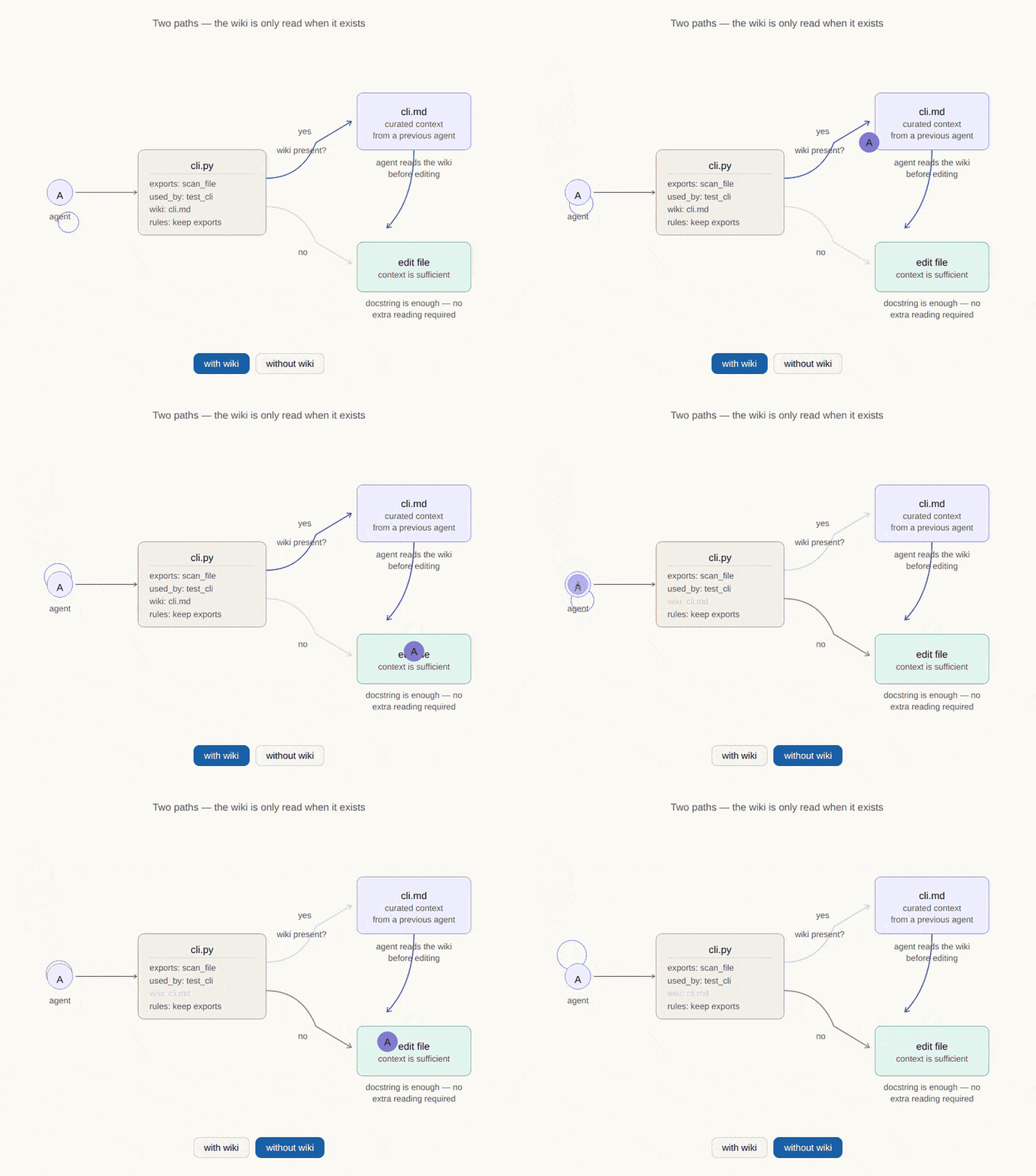
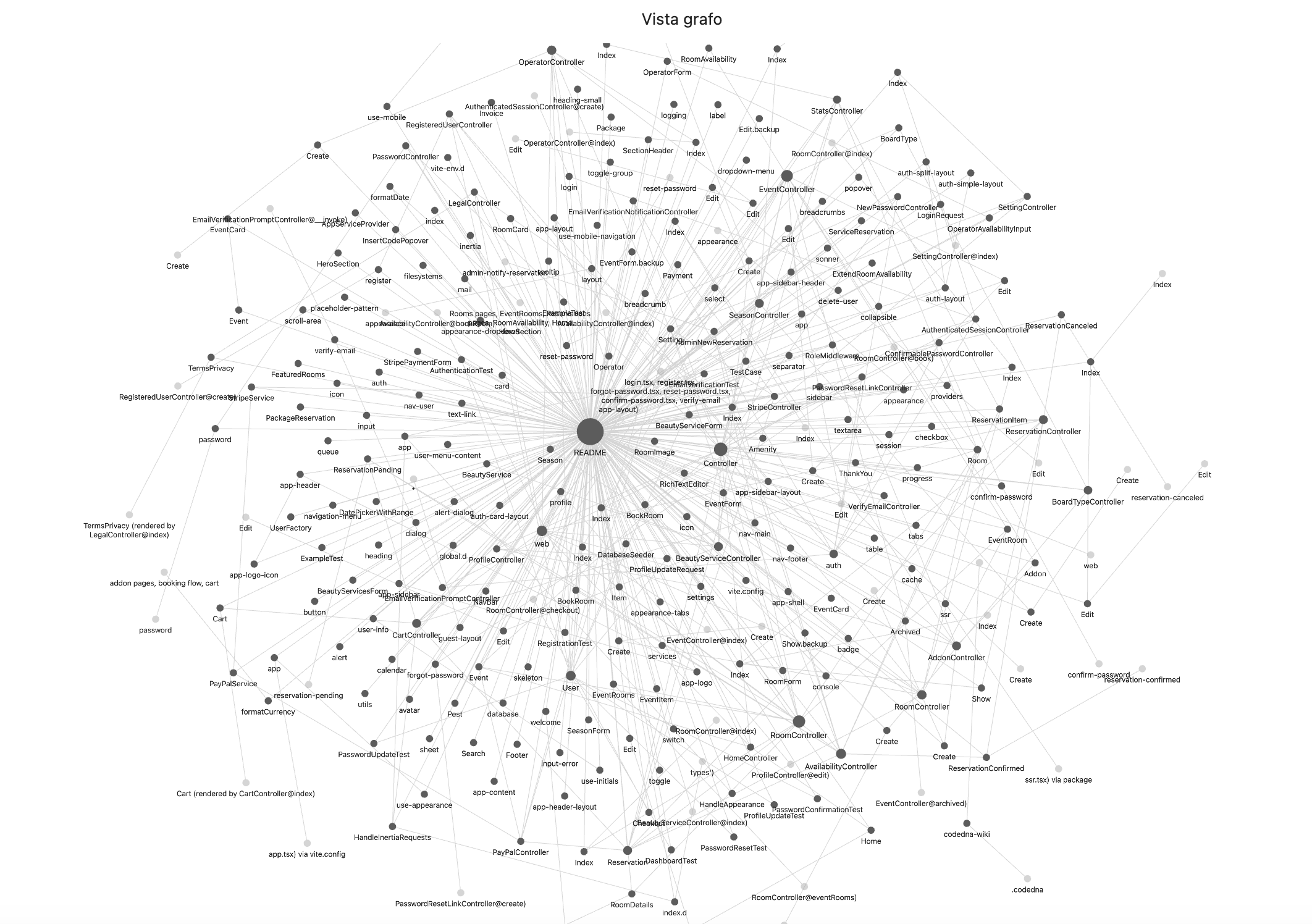
| codedna wiki bootstrap PATH | Generate a per-file Obsidian vault under docs/wiki/ with [[wikilinks]] from used_by:/related: graphs |
| codedna wiki sync PATH | Regenerate docs/codedna-wiki.md — a narrative 7-section project wiki. Hook to post-commit to keep it current. |
| codedna self-update | Upgrade the CLI itself via pip install --upgrade --force-reinstall. Refuses to clobber editable/dev checkouts unless --force. Use --check for read-only version display. |
Supported models
| Provider | Example | Cost |
|---|---|---|
| None | --no-llm | Free — structural only (exports + used_by) |
| Ollama (local) | ollama/llama3 | Free |
| DeepSeek | deepseek/deepseek-chat | ~$0.40 / 200 files |
| Anthropic | claude-haiku-4-5-20251001 | ~$1–3 / project |
| OpenAI | openai/gpt-4o-mini | Low |
| gemini/gemini-2.0-flash | Low |
Language Annotation Format
Logical field names are identical across all languages. Comment-based languages use their native comment syntax; experimental AXL support uses structured opcode frames. CodeDNA registers 28 extensions across Python, TypeScript, JavaScript, Go, PHP, Java, Kotlin, Ruby, Rust, C#, Swift, AXL, and seven template families. Explore representative formats below:
Python
Module docstring — first thing in the file, before any imports
"""filename.py — purpose in 15 words or fewer.

exports: public_fn(arg) -> ReturnType
used_by: caller.py → caller_fn | other.py → other_fn
related: similar_logic.py — shares same pattern (no import link)
rules:   hard constraint agents must never violate
agent:   claude-sonnet-4-6 | anthropic | 2026-03-24 | s_20260324_001 | what was done
         message: "open hypothesis for the next agent"
"""

import os
from typing import Optional
message: — Agent-to-Agent Chat (v0.9)
The message: sub-field is a conversational layer between agents. Use it for observations not yet certain enough to become rules:.
Lifecycle: a message is either promoted to rules: (reply @prev: promoted to rules:) or dismissed (@prev: not applicable because...). Always append-only.
Works at both levels: Level 1 (module docstring) and Level 2 (function docstring) — so agents using a sliding window still receive it.
Function-level (Level 2)
def my_function(arg: Type) -> ReturnType:
    """Short description.

    Rules:   constraint — what must or must not happen here
    message: model-id | YYYY-MM-DD | observation for next agent
    """
    ...
Semantic naming
# good  →  type_shape_domain_origin
list_dict_users_from_db = get_users()
str_html_report_rendered = render(ctx)
int_cents_price_from_request = req.json["price"]

# avoid
data = get_users()
result = render(ctx)
TypeScript / JavaScript
JSDoc block — before the first import
/**
 * filename.ts — purpose in 15 words or fewer.
 *
 * exports: publicFn(arg): ReturnType
 * used_by: caller.ts → callerFn
 * rules:   hard constraint agents must never violate
 * agent:   claude-sonnet-4-6 | anthropic | 2026-03-24 | s_20260324_001 | what was done
 *          message: "open hypothesis for the next agent"
 */

import { something } from './something';
Function-level (Level 2)
/**
 * Short description.
 *
 * Rules:   constraint
 * message: model-id | YYYY-MM-DD | observation
 */
export function myFunction(arg: Type): ReturnType { ... }
Go
Block comment — before the package declaration
// filename.go — purpose in 15 words or fewer.
//
// exports: FuncName(arg Type) ReturnType
// used_by: caller.go → CallerFn
// rules:   hard constraint agents must never violate
// agent:   claude-sonnet-4-6 | anthropic | 2026-03-24 | s_20260324_001 | what was done
//          message: "open hypothesis for the next agent"

package mypackage
Function-level (Level 2)
// MyFunction does X.
//
// Rules:   constraint
// message: model-id | YYYY-MM-DD | observation
func MyFunction(arg Type) ReturnType { ... }
Rust
Inner doc comment — at the top of the file
//! filename.rs — purpose in 15 words or fewer.
//!
//! exports: pub_fn(arg: Type) -> ReturnType
//! used_by: caller.rs → caller_fn
//! rules:   hard constraint agents must never violate
//! agent:   claude-sonnet-4-6 | anthropic | 2026-03-24 | s_20260324_001 | what was done
//!          message: "open hypothesis for the next agent"

use std::collections::HashMap;
Java
Javadoc block — before the class declaration
/**
 * ClassName.java — purpose in 15 words or fewer.
 *
 * exports: publicMethod(arg Type): ReturnType
 * used_by: CallerClass.java → callerMethod
 * rules:   hard constraint agents must never violate
 * agent:   claude-sonnet-4-6 | anthropic | 2026-03-24 | s_20260324_001 | what was done
 *          message: "open hypothesis for the next agent"
 */
public class ClassName { ... }
Ruby
Comment block — at the top of the file
# filename.rb — purpose in 15 words or fewer.
#
# exports: public_method(arg) -> ReturnType
# used_by: caller.rb → caller_method
# rules:   hard constraint agents must never violate
# agent:   claude-sonnet-4-6 | anthropic | 2026-03-24 | s_20260324_001 | what was done
#          message: "open hypothesis for the next agent"

require 'json'
PHP
// comment block — after <?php, NOT PHPDoc
<?php
// UserController.php — Handles user CRUD endpoints.
//
// exports: UserController | UserController::index() | UserController::store(Request $request)
// used_by: routes/web.php
// related: app/Models/User.php — shared user domain logic
// rules:   must extend App\Http\Controllers\Controller
// agent:   codedna-cli | codedna-cli | 2026-04-18 | codedna-cli | initial CodeDNA annotation

namespace App\Http\Controllers;
Blade templates
{{-- layout.blade.php — Base application layout.
--
-- exports: none
-- used_by: none
-- rules:   @yield('content') is required — child views must define this section
-- agent:   codedna-cli | codedna-cli | 2026-04-18 | codedna-cli | initial CodeDNA annotation
--}}

<!DOCTYPE html>
Blade (Laravel)
{{-- --}} comment block — at the top of the file
{{-- layout.blade.php — Base application layout.
--
-- exports: none
-- used_by: none
-- rules:   @yield('content') is required — child views must define this section
-- agent:   codedna-cli | codedna-cli | 2026-04-18 | codedna-cli | initial CodeDNA annotation
--}}

<!DOCTYPE html>
<html>
JavaScript
JSDoc block — before the first import or export
/**
 * filename.js — purpose in 15 words or fewer.
 *
 * exports: publicFn(arg)
 * used_by: caller.js → callerFn
 * rules:   hard constraint agents must never violate
 * agent:   claude-sonnet-4-6 | anthropic | 2026-03-24 | s_20260324_001 | what was done
 *          message: "open hypothesis for the next agent"
 */

const something = require('./something');
Hook Events Reference
All CodeDNA hook scripts follow the same pattern: receive JSON via stdin, write feedback to stdout, exit 0.
| Event | Claude Code | Cursor | Copilot | Cline |
|---|---|---|---|---|
| Session / task start | SessionStart | — | sessionStart | TaskStart |
| Before write/edit | PreToolUse | — | — | — |
| After write/edit | PostToolUse | afterFileEdit | postToolUse | PostToolUse |
| Session / agent end | Stop | stop | sessionEnd | — |
Claude Code Plugin Available
claude plugin marketplace add Larens94/codedna && claude plugin install codedna@codedna
/clear). Slash commands are only available after restarting.No API key. No extra cost. Uses your existing Claude subscription. Adds interactive setup via /codedna:init + coverage check via /codedna:check + architectural map via /codedna:manifest + impact analysis via /codedna:impact.